
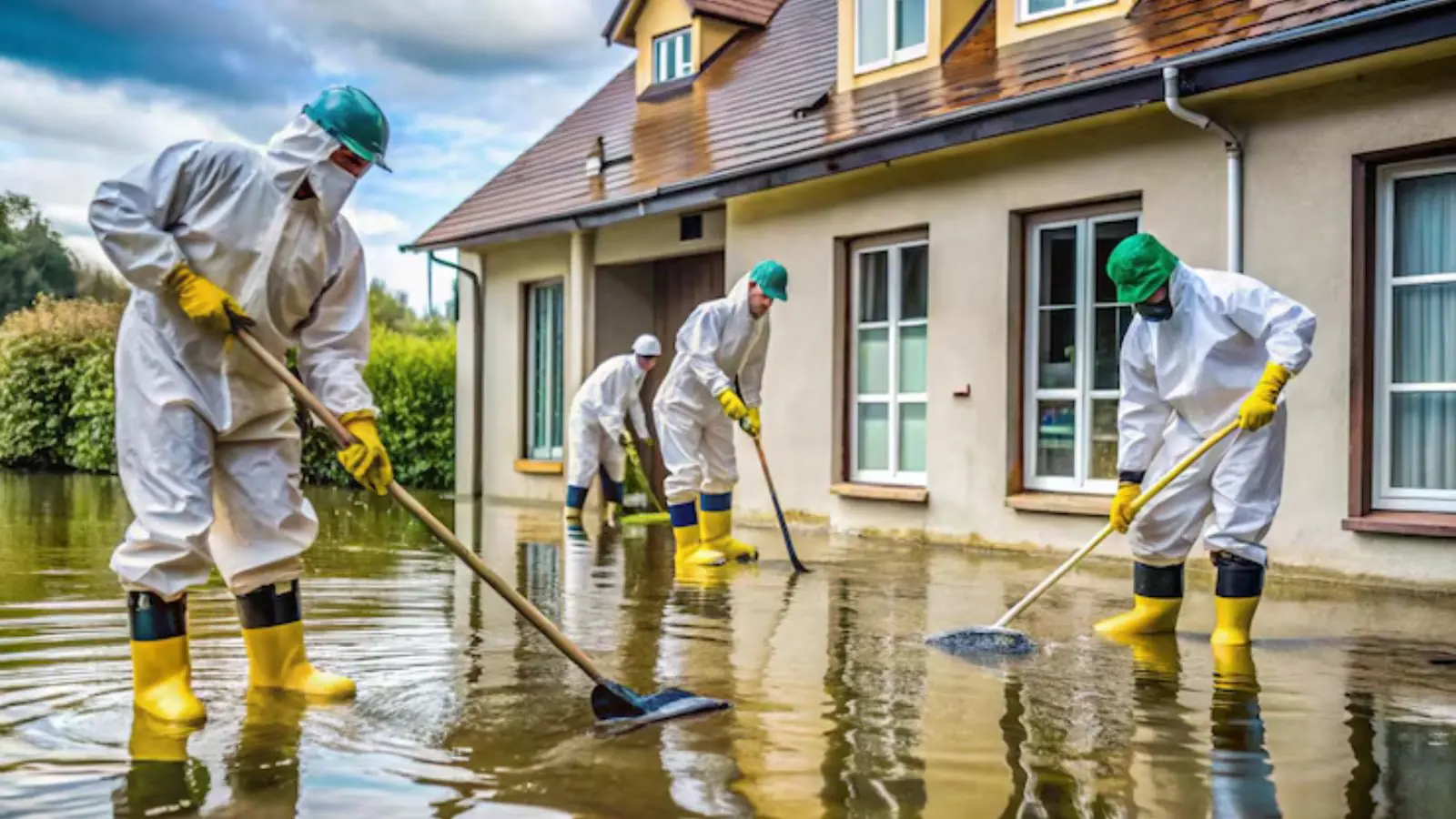
Flood damage restoration is the removal, cleaning and drying of a building after water entered from outside or from a sewer line, not from a clean supply pipe. That water is treated as contaminated, so the work starts with safety. If water is coming in now, call the 24/7 line at (818) 337-2642, stay out of it, keep children and pets away, and lift valuables only without wading.
Water coming up the shower drain, a toilet that will not flush, a wet floor after rain
These are the ways outside water and sewer water usually announce themselves indoors. A gurgling drain, brown water in a tub or a damp lower-level wall after a storm all point to contamination, not a spill. The trade that answers them is flood damage restoration, and sewage backup cleanup is part of it.
If water is entering your home right now
- Do not wade through it, and do not let children or pets near it. Assume it is contaminated until a crew says otherwise.
- Stop using sinks, toilets, showers and the washer if sewage may be backing up. Every flush or rinse sends more into the line.
- Move valuables, paperwork and electronics up to dry shelves only if you can do it without stepping in the water.
- Photograph the water line and the damage before anything is moved or discarded.
- Call and describe where the water is entering and how deep it is. Dispatch uses that to bring the right pumps and protective gear.
Stay out if power or gas may be involved
Outlets, the panel, a furnace or a gas water heater in the water? Do not go in. The emergency call to 911 or a utility comes before the restoration call. Throw the main breaker only if the panel stays dry and you can reach it without wading. If gas is in the air, step outside before dialing.
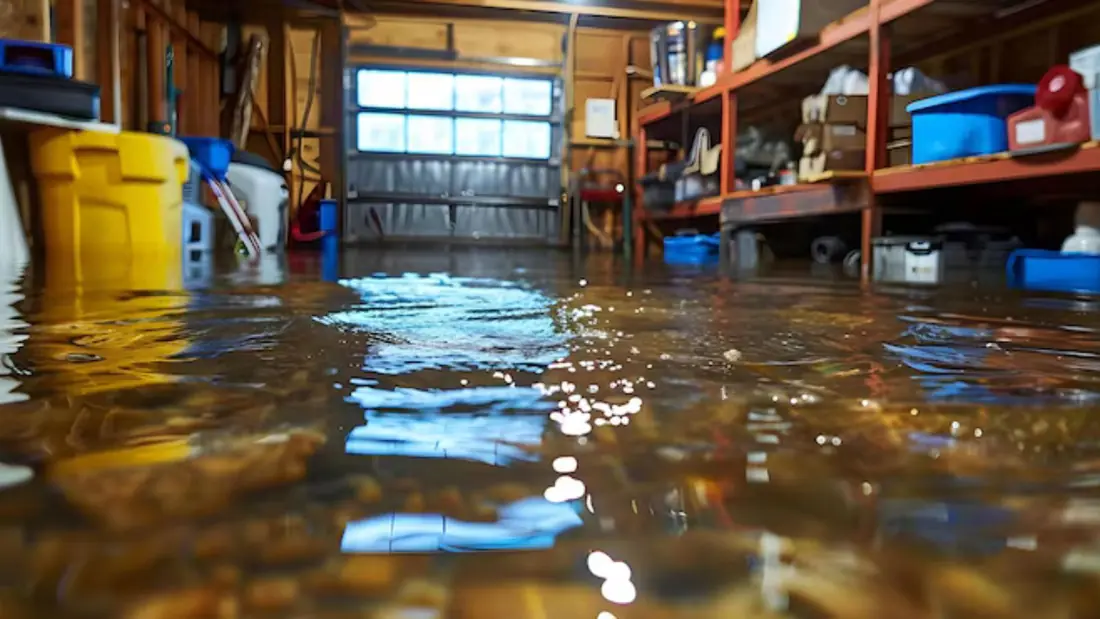
Three categories of water, three levels of caution
| Category | Typical source | What it means for the job |
|---|---|---|
| Category 1 | Clean supply water, such as a broken line | Extract and dry. Most materials can be saved if drying starts early. |
| Category 2 | Washing machine discharge, toilet tank overflow | Extract, clean and dry. Porous materials such as carpet pad are often removed. |
| Category 3 | Sewage, storm runoff that entered from outside, water that sat long enough to grow bacteria | Protective gear, containment, removal of porous materials, cleaning and disinfecting, then drying. |
Water slides up a category as it sits, so an ignored pipe leak can end up needing Category 3 handling. The published ANSI/IICRC S500 standard describes the categories, and any homeowner can ask a contractor what that means for the crew's routine.
Basement flooding cleanup
Some homes have a basement, a lower level, a sunken garage or a below-grade room such as a den or laundry. If yours does, it is the first place water finds, because water follows gravity and groundwater pushes in through floor joints, wall cracks and window wells after heavy rain.
The crew often lowers the water level in stages instead of all at once, since emptying a flooded lower level too quickly can stress the walls around it. Wet carpet, pad and drywall below the water line come out, hard surfaces are cleaned, and dehumidifiers go in. Below-grade rooms dry slowly because air barely moves there.
Restoration is not waterproofing. If the room floods again next storm, the cause is drainage, grading or a failed sump pump, and a drainage contractor has to fix it.
Sewage backup cleanup
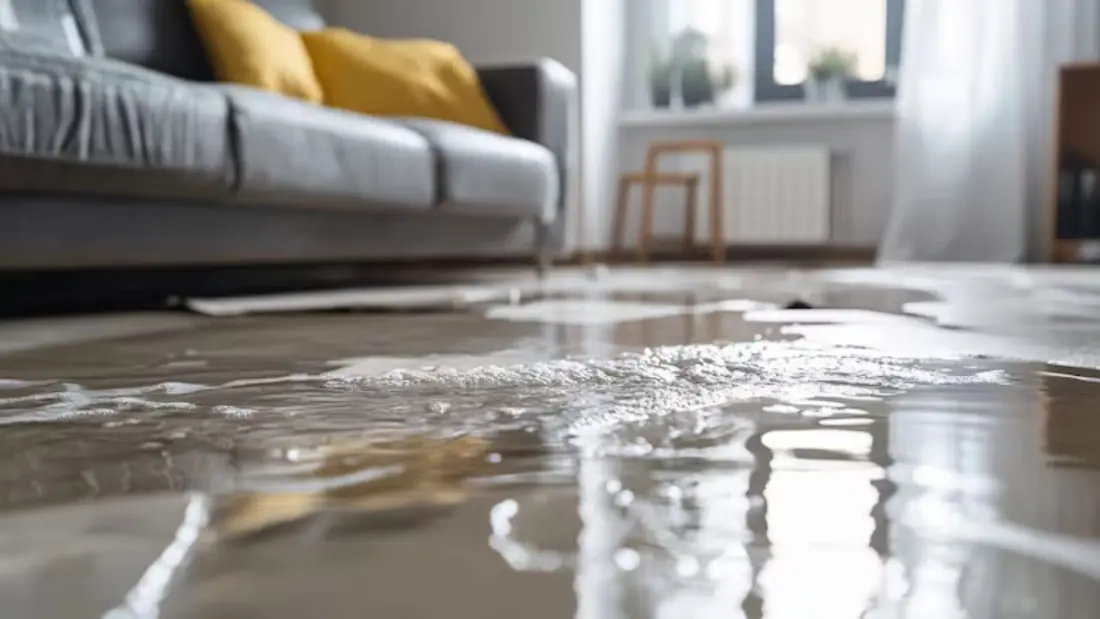
Sewage is Category 3 water, and the first rule is to stay out of it. Stop using plumbing, keep people and pets away, and call for help. If it is spreading, treat it as an emergency, because sewage soaks into porous materials quickly.
Who owns the pipe matters. Per LA Sanitation, the main under the street is the city's, and the lateral running from your building out to the middle of that street is yours to maintain. LASAN staffs a 24-hour number, 1-800-773-2489. A blocked main is the city's to clear. A blocked lateral calls for your plumber.
The restoration crew handles the inside of the house: removal of carpet, pad, insulation and drywall the sewage touched, cleaning and disinfecting hard surfaces, HEPA air filtration, and drying.
Why repeat backups happen and what a backwater valve does
LASAN attributes more than half of all sewer backups to roots and to grease poured down drains. A fixture sitting lower than the manhole cover in the street may need a backwater valve, and LADBS issues that permit. A plumber does the installing, so ask the city building department about the permit first.
What the City has said about local flooding
Storms, creeks and sandbags near West Hills
After the February 2024 storms, a City update listed a flooding closure of Valley Circle Boulevard, from Woolsey Canyon to Chatlake Drive. The page never names West Hills, so read it as a nearby road the City closed, not as proof about any one street. The takeaway: storm water can reach roads close to home.
Council District 12 calls Bell Creek and Dayton Creek headwaters of the Los Angeles River. That says nothing about whether your address floods. Look it up yourself: FEMA's Flood Map Service Center (msc.fema.gov) has a Search by Address option that shows the map data for your own home.
LAFD gives out ready-to-fill sandbags at neighborhood stations, including Station 106 at 23004 Roscoe Boulevard (call ahead), up to 25 per household. LAFD does not fill, deliver or place them, so you or a helper will have to.
Source: City of Los Angeles (LAFD, Council District 12), FEMA Flood Map Service Center
Four ways to handle a flooded lower level
Pump and dry it yourself
Works for a few inches of clean water in an open room. Nothing checks what is wet inside walls, and contaminated water is a safety risk.
Remove only ruined materials
Quicker to scope, but damp framing left behind invites mold. Drying still has to follow.
Full flood damage restoration
Extraction, material removal, cleaning and drying with moisture readings. The most work, and the only fit for Category 3 water.
Drainage or waterproofing contractor
A different trade that stops repeat flooding. It does not remove water already inside, so the two jobs go together.
What shapes the price of flood cleanup
- Water category, since Category 3 needs protective gear and more material removed.
- How deep the water got and how many rooms it reached.
- Materials affected: carpet, pad, drywall, insulation, cabinets or flooring.
- Access and layout, including stairs and below-grade rooms that need pumps.
- Days of drying and how much equipment stays on site.
The state insurance department is blunt: a standard homeowners policy leaves flood out. Cover comes from the federal NFIP or a private flood policy, which generally begins 30 days after purchase, too late to help once water is already rising. A burst pipe is treated differently, so read your policy and ask your insurer. For a figure that matches your loss, ring (818) 337-2642, with the scope and price covered at the start.
Water coming in during a storm?
Someone answers through the night. Tell them where it is entering.
Serving West Hills and the neighborhoods around it
Calls come in to a Vanowen Street base, and the line is open through storms and after dark. Canoga Park, the next community east, is covered by the same dispatch.
If your water came from a burst pipe rather than outside, start at emergency water removal. After removal, water mitigation covers the drying stage, and water damage cleanup covers sanitizing what stays. If damp materials sat too long, mold remediation explains what follows.
Questions about flood and sewer water
Do you handle flood damage restoration emergencies at night or on weekends in West Hills?
Yes. Storms do not keep office hours, and neither does the line at (818) 337-2642. Same-day response depends on crew availability, and no arrival time is promised. Say where the water is entering, how deep it is, and whether you think sewage is involved.
Water is coming up out of my shower drain and toilet. What do I do?
Stop using every drain in the house, since each flush or rinse adds to the backup. Keep people and pets out of the room and do not wade through it. Call the restoration line, and report the backup to LASAN's 24-hour line at 1-800-773-2489 in case the city main is involved.
My lower-level room is damp every time it rains. Is that flood damage?
It can be. Repeated dampness after storms points to groundwater or drainage entering, and a crew can dry and clean what it affected. Stopping the water is waterproofing or drainage work, a different trade. Ask on the call and you will be told which side your problem sits on.
Is storm floodwater different from burst pipe water?
Yes. A broken supply line starts as clean Category 1 water. Storm runoff and sewer water enter from outside or from the sewer line and are treated as Category 3, which changes the safety gear and which materials are removed. See emergency water removal for pipe losses.
Does homeowners insurance cover flood damage?
Standard homeowners policies leave flood out, according to the California Department of Insurance. The NFIP and private flood insurers fill that gap, and a new policy generally takes 30 days to begin. Your own policy decides, so read it and ask your insurer before you assume anything.
Who is responsible for a sewer backup, the city or me?
The city owns the main in the street, and the property owner owns the full lateral out to the middle of that street, LA Sanitation says. A plumber or the city can tell you where the blockage sits. Cleanup inside the house is a separate job from fixing the pipe.
How do I find out whether my address is in a flood zone?
Go to FEMA's Flood Map Service Center at msc.fema.gov, choose Search by Address, and read the map information for your home. This page does not state a flood zone for any West Hills address. FEMA's help line is 1-877-336-2627 if the site is hard to use.