
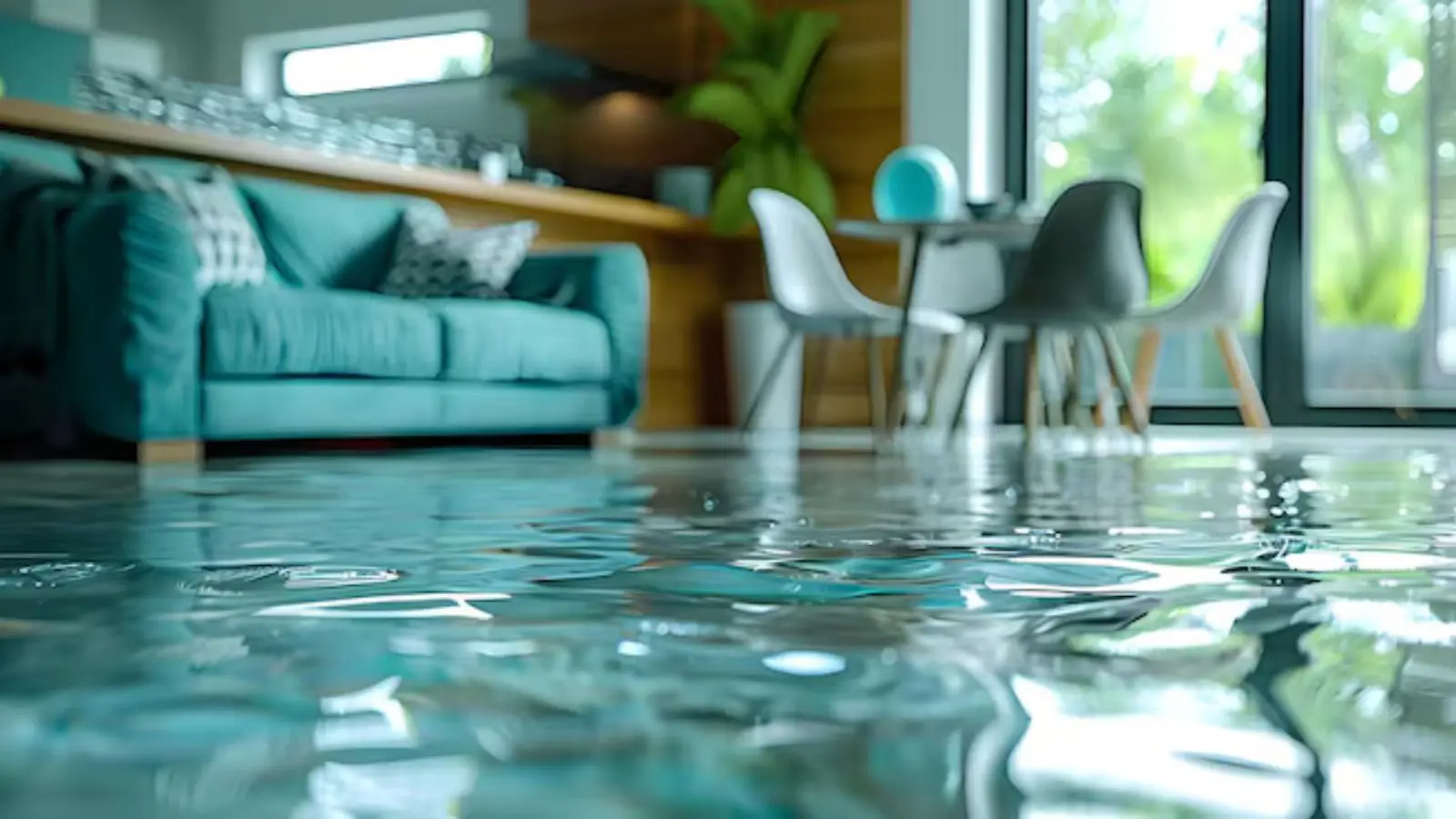
Two housing profiles, two kinds of water loss
Census figures for the 91364 area skew toward detached homes: 74.1 percent single-family and 69.0 percent owner-occupied, with a median build year of 1965 and 30.3 percent built from 1950 to 1959. The 91367 area differs. There, 8,100 of 20,577 units sit in buildings of 50 or more, and 52.2 percent of occupied homes are rented.
That split changes the job. A house has one owner who decides fast. A large building has shared walls, shared pipes and several parties to coordinate. Your first call tells us which job you have.
The mid-century house: ceilings, roofs and slab edges
In a 1960s house the usual calls are a ceiling stain under a roof leak, damp carpet along an interior wall, cupped flooring after a slow supply leak and a water heater that fails in the garage. Three of four homes in 91364 predate 1980, so original lines have decades behind them.
The advantage is speed. One owner can approve scope and price the same morning, and extraction starts right after. Watch the ceiling: a bulging drywall ceiling holds water that can drop without warning, so keep people out from under it.
Condos and apartments: water goes down and sideways
In the large buildings of 91367 the first question is who owns the failed pipe. Often an association or landlord owns shared risers and drains and the unit owner owns lines serving only that unit, but CC&Rs and leases differ, so read yours. An early answer prevents weeks of delay.
Water from one unit travels through floor assemblies to the unit below and through walls to the unit beside it. Crews map moisture in each neighbor with thermal imaging cameras and meters and log photos and readings per unit, which helps the board, the landlord and each insurer see their share.
Median build year in 91367 is 1975, with 61.3 percent of homes before 1980. A city survey says Warner Center grew from a Warner ranch near De Soto Avenue and Oxnard Street in the 1970s, and LADWP lists it separately. Ask your manager when the risers in buildings of that era were last inspected.
When water is spreading in Woodland Hills
A ceiling coming down in a Ventura Boulevard condo, a laundry hose failing in a hillside house: either way dispatch picks up at any hour, every day. While you call (818) 337-2642, shut off the nearest valve, move people and pets away and keep clear of wet outlets.
Around-the-clock dispatch
A person answers, asks what failed and which rooms or units are wet, and arranges crew and equipment. Same-day response when available.
Neighbors, not strangers
Woodland Hills lies roughly 2.7 miles southeast of our West Hills base on Vanowen St.
House or building, one standard
Both follow ANSI/IICRC S500 for drying, with moisture readings at the start, during and at the end.
Scope and price first
Whether you own the house or a board approves the work, scope and price are explained to you in plain terms ahead of the first step.
If water is still spreading in Woodland Hills
Do what is safe while a crew is on the way, and skip any step near electricity or contaminated water.
Stop the source
Close the fixture valve or the main. In a condo, alert the building manager so the shared riser can be shut. LADWP's 24/7 line is 1-800-342-5397.
Check power and ceilings
If a ceiling bulges or water is near outlets, leave the room. Report any electrical risk to 911 or your utility before calling anyone else.
Photograph and lift
Photograph wet surfaces, then lift small furniture and electronics. Photograph neighbors' visible damage only with their permission.
Keep dirty water out
Sewage and gray water are not for mopping. LA Sanitation's 24-hour line is 1-800-773-2489.
Matching the service to your building
For a house with a roof or ceiling leak, water damage repair is usually the second half, after the structure is dry. The first half is the same for both housing types: emergency water removal to pull standing water, then water mitigation to dry framing and subfloors.
Condos lean harder on water damage cleanup, since shared walls and several units mean more material to remove, sanitize and document. Ask the dispatcher which path fits, and the answer comes with scope and price.
ZIP codes from Ventura Boulevard to Victory Boulevard
ZIP 91367 includes the Platt Branch Library on Victory Boulevard, Station 84 on Burbank Boulevard, the Woodland Hills Recreation Center on Shoup Avenue and the Kaiser Permanente medical center, used here only as a landmark. Give dispatch the nearest cross street.
ZIP 91364 includes the Woodland Hills Branch Library at 22200 Ventura Boulevard and Station 105 on Fallbrook Avenue. Both ZIP codes get the same line and the same standard of work.
Water, sewer and permits
Woodland Hills belongs to the City of Los Angeles, and LADWP lists Woodland Hills and Warner Center among its San Fernando Valley service areas. On sewers, the city owns the public main and owners handle the private lateral, which matters in a house and usually sits with the association in a big building.
Some rebuild work needs a permit. LADBS lists drywall replacement in houses and duplexes, plumbing fixtures and water heaters as express items without plan check. Condo work may also need board approval, so ask the city building department and your association.
Neighboring pages cover similar conditions: Canoga Park for the apartment-heavy side of the Valley and Chatsworth for the ranch-style tracts to the north.
Woodland Hills water damage questions
Do you cover every ZIP code in Woodland Hills?
Yes. We cover 91367, which includes the Platt Branch Library area on Victory Boulevard and the Kaiser medical center area, and 91364, which includes the Woodland Hills Branch Library on Ventura Boulevard and the Fallbrook Avenue fire station area. One line serves both.
Is emergency water removal available in Woodland Hills?
Yes. Dispatch picks up nights, weekends and holidays, and same-day response is offered when available. Call (818) 337-2642 and the dispatcher will describe honestly what to expect. No arrival time is promised.
Who is responsible when a leak comes from the condo above me?
It depends on the cause, your governing documents and each party's insurance. Often the association owns shared risers and the owner owns lines serving only that unit, but check your CC&Rs. Notify the manager in writing and keep records. A crew can start drying while responsibility is sorted out.
Will my homeowners policy cover a roof or ceiling leak?
The California Department of Insurance says sudden and accidental damage is often covered, while seepage, wear and neglect often are not. Flood usually needs a separate policy. Photograph the damage, save receipts for temporary fixes and ask your insurer before permanent repairs.
What should I document in a multi-unit building?
Record each affected unit separately: photos, moisture readings, damaged items and the time you noticed the leak. Send the manager or association written notice. The state insurance department also advises logging calls and holding on to damaged items until the adjuster okays disposal.
Does repairing water damage in Woodland Hills require a permit?
Possibly. Drywall replacement in houses, plumbing fixtures and water heaters are LADBS express items, pulled with no plan check. Ask the city building department about your job, and check with your association if you live in a condo.
How do I check if my address is in a flood zone?
Search it on FEMA's map portal at msc.fema.gov. We hold no verified flood-zone statement for Woodland Hills, so that map is the right source. Homeowners policies generally leave flood out, with a separate policy needed.