
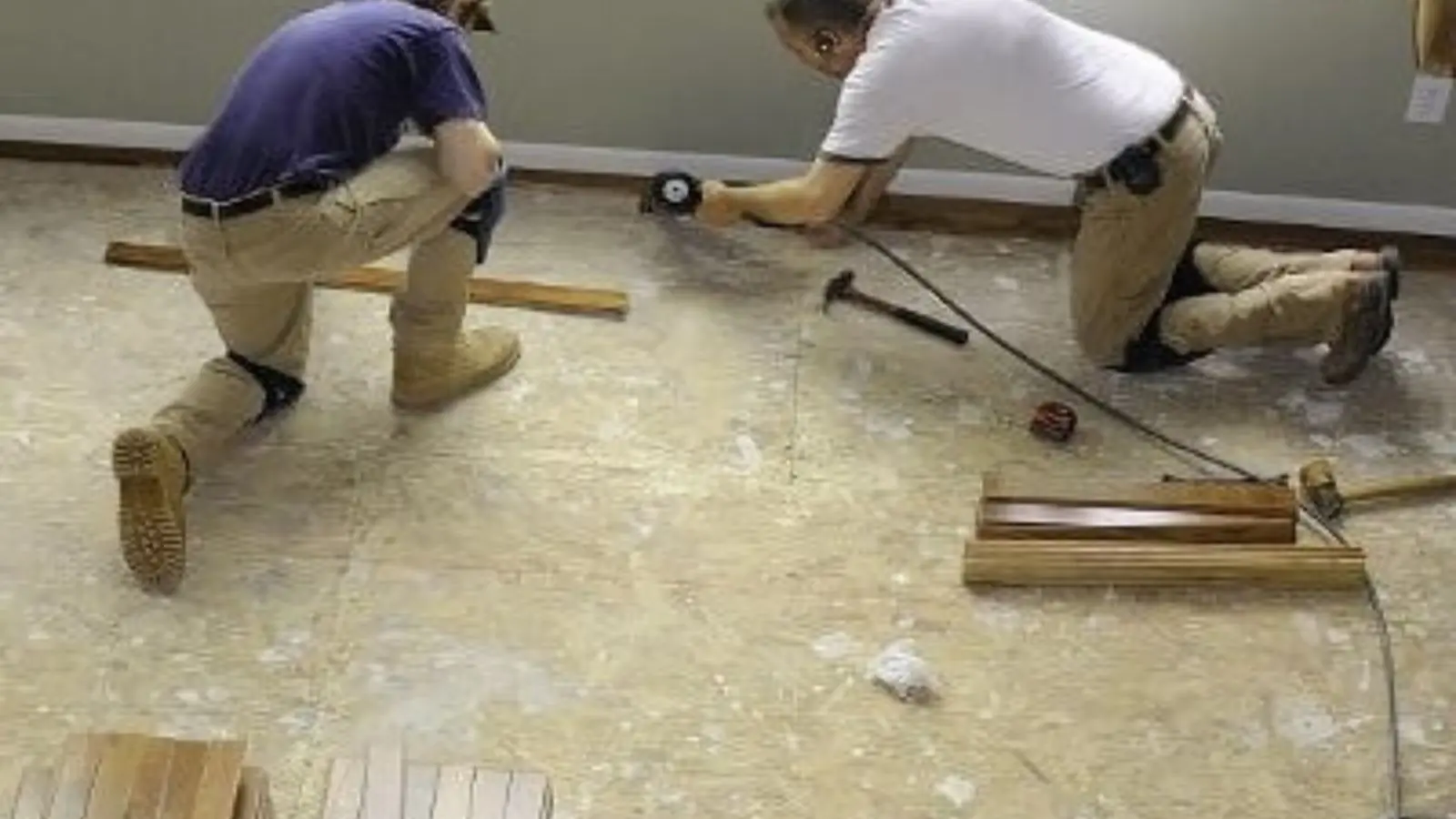
Water damage repair is the rebuilding stage of a water loss. It means replacing or restoring drywall, insulation, flooring, trim, cabinets and paint after the structure has dried and the source of the water has been fixed. It starts from numbers, not guesses.
In West Hills, CA, repair from water damage usually follows a roof leak, a failed supply line or a washer hose. A brown ceiling ring or a cupped hallway floor is what most homeowners notice first. Call (818) 337-2642 and a dispatcher will explain how a scope gets built for your rooms.
Rebuild scope starts with the drying readings
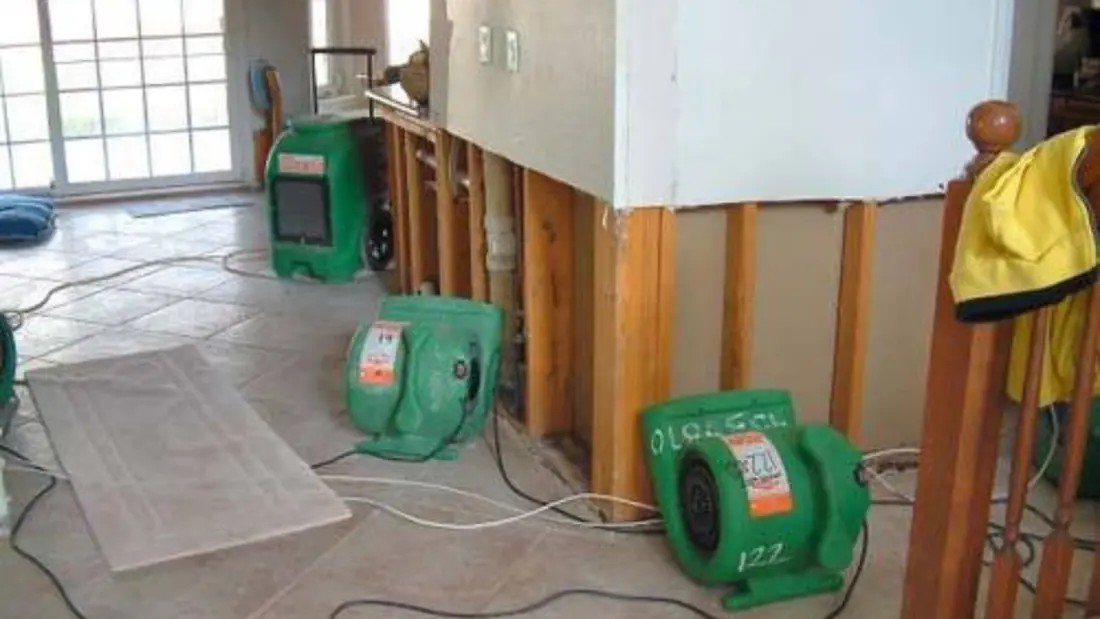
A repair scope is only as good as the readings behind it. Before anyone quotes a rebuild, a moisture meter checks drywall, framing, subfloor and flooring against a dry reference, and a thermal imaging camera shows cold, wet patches behind finished surfaces. Materials that dried back to normal stay, and those that swelled, crumbled or smell come out.
That is why an estimate written from a photo alone is a guess. If another company dried the house, ask for its drying log and final readings. If nobody dried it, water mitigation comes first, because new drywall over a wet wall cavity only hides the problem.
Ceiling and wall water damage repair
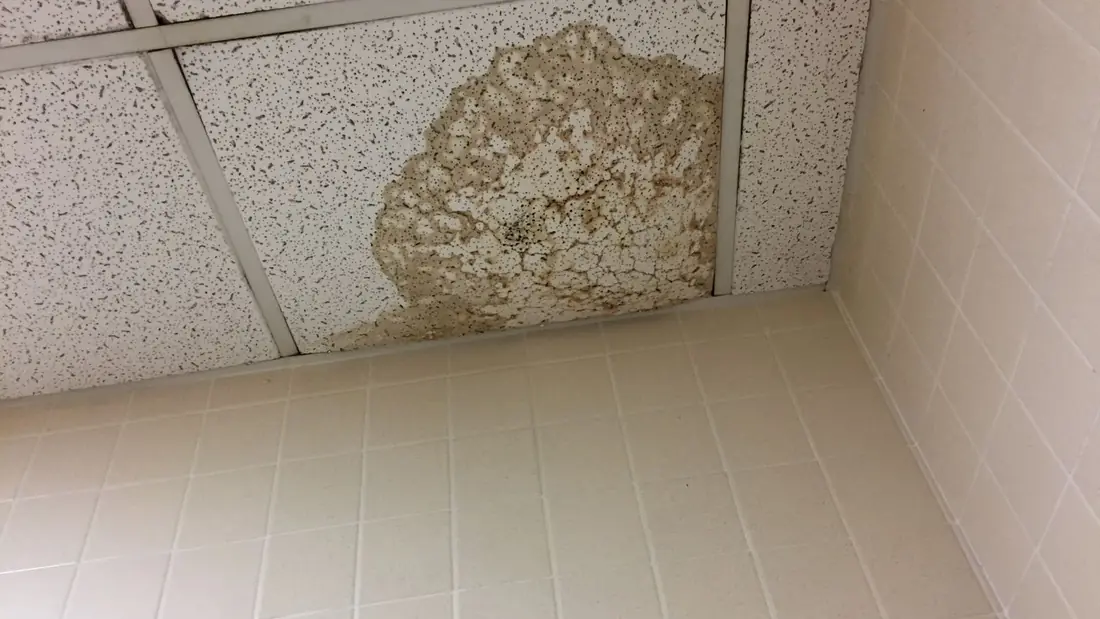
A brown ring on a ceiling is usually the visible edge of a bigger wet area. Roof-leak stains often begin in the attic, where water runs along a rafter, soaks the insulation and only then drips through the drywall. So the repair begins above the ceiling: find the entry point, confirm the roofer or plumber has fixed it, and read the moisture in the framing and insulation.
What gets cut out depends on those readings. Drywall that is sagging, soft or crumbling is removed along with wet insulation, and the opening is squared off to the nearest framing so the patch has something to screw into. Firm drywall that reads dry can sometimes stay if the stain is sealed.
This is where people paint too early. A stain painted over damp board shows through again, and the trapped moisture can lift the paint. Dry first, seal the stain with a stain-blocking primer, then finish.
Texture is the last visible step. Knockdown, orange peel and skip-trowel are matched with a test patch in a hidden spot, and the whole ceiling plane is painted edge to edge, because a painted patch on an older ceiling rarely blends.
Repair or replace, material by material
| Material | Usually kept or repaired when | Usually replaced when |
|---|---|---|
| Drywall | It reads dry, stays firm and the stain can be sealed | It sags, feels soft, bubbles through the paper or smells damp |
| Insulation | It was never wet | It took on water or packed down, or touched contaminated water |
| Baseboards | Painted solid wood that dried flat | Swollen or split MDF that crumbles at the edges |
| Flooring | Solid hardwood with mild cupping that dried | Laminate or engineered boards swelled at the seams, plus carpet pad |
| Cabinets | Solid-wood boxes that dried in place | Particleboard bases that swelled, often under sinks |
| Paint | Sound surface after a stain-blocking primer | Bubbled or peeling paint, scraped back to sound material |
Hardwood floor cupping and drying
Cupping means the board edges rise above the center so each plank looks like a shallow dish. It happens when the underside of a board takes on moisture faster than the top, after a slow dishwasher leak, a damp slab or a burst pipe that soaked the subfloor. Cupping is common after a leak and is not always the end of the floor.
Drying comes before sanding. Readings on the boards and subfloor are compared with a dry reference, and floor drying systems move air through and under the boards for days. Many cupped floors flatten as they dry. Sand too early and the boards can crown when the last moisture leaves. Boards that stay cupped, buckled or dark at the seams are replaced and matched by species and stain.
If the source is still active, such as a weeping line inside a wall, drying will not hold, so the leak gets fixed first.
Why a West Hills winter shows up on your ceiling
The nearest NOAA normals station with published data is Van Nuys Airport. Its 1991 to 2020 normals give 13.42 inches of rain a year, and the wettest run is February (3.79), January (2.75) and March (2.50).
A roof that stayed quiet all summer gets tested in a few wet weeks, so stains tend to appear after the first big storm. If a ceiling stains in winter, have the roof checked before you book interior repair, or fresh paint will carry a new ring.
Signs the damage needs repair, not just drying
- A brown or yellow ring on the ceiling that grows after rain.
- Paint that bubbles, flakes or peels in one patch.
- Drywall that feels soft or sags when pressed.
- Baseboards that have swollen or pulled away from the wall.
- Floor boards that cup, crown or gap.
- Cabinet bases that feel spongy under a sink.
Permits and licenses for repair work in West Hills
The Los Angeles Department of Building and Safety (LADBS) keeps an Express Permits bulletin of jobs that skip plan check. Four items matter here: water damage repair that costs less than 10 percent of what it would take to replace a residential building, drywall replacement in single-family homes and duplexes (no new walls), plumbing fixture replacement and water heater replacement. Express still means a permit gets pulled.
That list cannot say whether your own job needs a permit. Put the question to LADBS with your address and scope, and ask your contractor who pulls it.
Contracts of $1,000 or more need a licensed contractor in California. Ask to see a license and check it at cslb.ca.gov before signing. The state lists trade classes such as C-9 drywall, C-33 painting and C-15 flooring.
Source: City of Los Angeles Department of Building and Safety, Express Permits bulletin. California Contractors State License Board.
What sets the price of a repair
- Size of the wet area, from one ceiling patch to a whole room.
- Materials involved, such as drywall, solid hardwood, tile or custom cabinets.
- How much came out after drying, which the moisture readings decide.
- Finish matching: texture, stain color and paint across a full wall or ceiling.
- Access and sequencing, including attic work, second-floor rooms and permit steps.
Coverage turns on the cause. A policy often responds to a sudden burst or roof break, a slow seep or years of neglect often fall outside it, and floods generally need their own flood policy. The state insurance department tells homeowners to hold off on permanent repairs until an adjuster has seen the damage, so ask your insurer before the rebuild begins. Want your real number? Call (818) 337-2642 for a walk-through, with the price laid out first.
Stain, soft spot or cupped floor?
Call (818) 337-2642 and describe what you see. Same-day response when available.
Repair across West Hills and nearby
Crews work from Vanowen Street in West Hills and also repair homes nearby, such as in Canoga Park. If wet debris or damaged material is still sitting in the room, water damage cleanup comes before any rebuild. If dark spots have appeared on the repair area, the mold remediation page explains testing and removal under the S520 standard.
Restoration is not plumbing or roofing, and the dispatcher will say so if another trade must come first.
Water damage repair questions
How soon after water damage can repairs begin?
Repairs begin once the source is fixed and moisture readings show the structure at its dry target. Light losses often dry in a few days and heavier ones take longer, so no date can be promised from a phone call. Starting the rebuild early traps moisture, which is why the readings come first.
Can I paint over a water stain on my ceiling?
Only after the ceiling has dried. Paint over damp drywall will show the stain again and can bubble. Once readings are dry, a stain-blocking primer seals the mark and two coats of ceiling paint finish it. If the board is soft or sagging, it should be cut out rather than painted.
Will my cupped hardwood floor flatten?
Often it does, if the source is fixed and the boards are dried slowly with readings taken on the boards and subfloor. Sanding comes after drying, not before. Boards that stay cupped, buckled or dark at the seams are replaced and matched to the rest of the floor.
Does my water damage repair need a city permit?
It depends on the job. Some water damage repairs, drywall replacement and water heater swaps appear on LADBS's Express list, which skips plan check but still involves a permit. Ask LADBS about your own address and scope first.
Does a water damage repair need a licensed contractor?
A contract worth $1,000 or more, labor and materials together, needs a licensed contractor. Ask to see the license and look it up at cslb.ca.gov. The restoration professionals on this line are licensed and insured, and they explain the scope up front.
Will insurance pay for water damage repair?
Your insurer and your policy decide. Photograph the damage, keep receipts, and ask what is covered before making permanent repairs, since sudden damage is treated differently from a slow leak.