
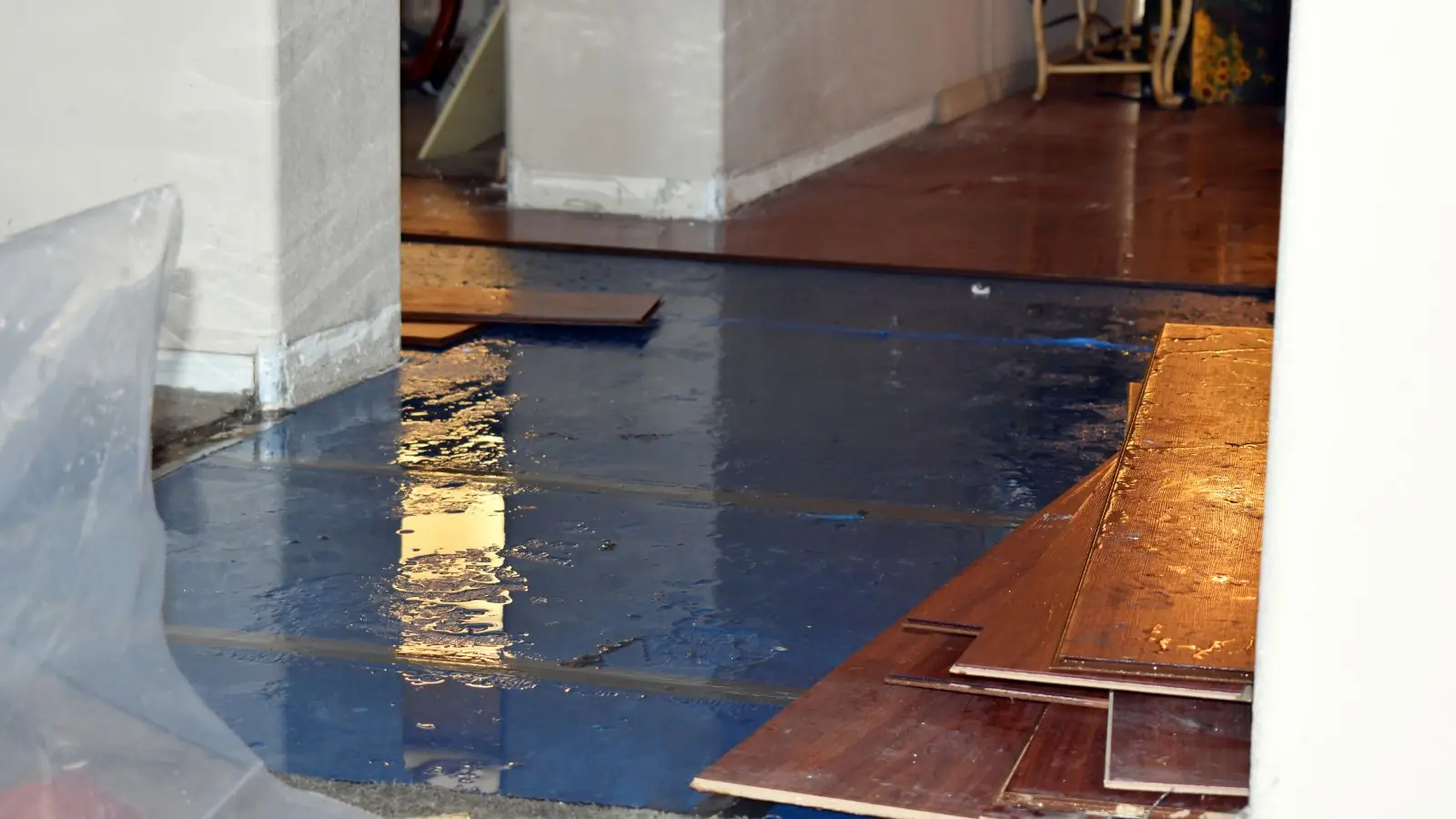
Homeowners who call about a wet floor often open with one word: cupping. The edges of each board have curled up, the middle sits lower, and the surface feels like a shallow washboard. It is the most common sign that a hardwood floor has taken on more moisture on its underside than on its top.
Cupping is not the whole story, and it does not by itself mean the floor is ruined. Boards can cup, then flatten again as they dry. Whether yours will depends on how wet the boards got, how long they stayed wet and what is underneath them.
Three shapes, three different stories
Cupping
Board edges rise higher than the center. It usually follows moisture from below, such as a slab, a crawlspace or a leak that ran under the boards. Many cupped floors relax after the source is fixed and the wood dries slowly.
Crowning
The center of each board sits higher than the edges. It often shows up when a floor that cupped was sanded flat before it finished drying, or when moisture came from above. Waiting for stable readings before sanding avoids it.
Buckling
Boards lift away from the subfloor, sometimes in a ridge. This is the most serious shape. Buckled floors have often absorbed a lot of water, and the boards may need to be pulled to dry the subfloor beneath.
Gaps and staining
Gaps between boards appear as wood dries and shrinks. Dark gray or black staining suggests water sat on or in the wood for a long time, which usually points toward replacing the affected boards.
The subfloor tells the real story
A moisture meter reading on the board face is only half the picture. A crew also checks the subfloor, whether that is plywood over joists or a concrete slab, because a dry-looking floor sitting on a wet subfloor will cup again. Readings are compared to a dry reference taken from an unaffected room or floor.
For many floors that were caught early, drying in place is possible. Crews use air movers, LGR dehumidifiers and sometimes mat systems that pull moisture out through the boards. Drying hardwood is slow work, usually measured in days rather than hours, and no one can promise the finish will come through perfect.
| Symptom | Likely meaning | Next step |
|---|---|---|
| Board edges curled up, floor otherwise solid | Moisture from below. Early-stage cupping | Stop the source, then have a crew measure the boards and subfloor and dry in place if readings allow. |
| Center of boards raised after sanding | Crowning from sanding or moisture above | Hold off on any more sanding. Recheck moisture readings before refinishing. |
| Boards lifting off the subfloor | Heavy absorption, possible buckling | Call right away. Pulling a few boards may be needed to dry the subfloor. |
| Black or dark gray patches | Long-term moisture, often a slow leak | Expect to replace the affected boards and look for the source. |
| Soft, spongy spots underfoot | Subfloor or board fibers have broken down | Open up the area. Replacement is likely. |
| Wide gaps after drying | Shrinkage as wood dried | Wait for stable readings. Some gaps close, and some are filled or repaired. |
| Musty smell with no visible damage | Moisture trapped beneath the boards | Have the area metered. Mold testing follows S520 and belongs to a separate step. |
When replacement is the honest answer
Replacement makes sense when boards have buckled, when the wood has stained dark, when the subfloor under them has soaked and softened, or when drying would take so long that the floor would stay wet for weeks. Engineered flooring behaves differently from solid wood, because its glued layers can separate when wet.
The scope also depends on what the water was. Clean supply-line water gives a floor its best chance. Storm runoff or sewage is treated as contaminated, and finished floors in those cases are far more likely to come up.
Our water damage repair service covers the rebuild once the floor is dry, and structural drying comes first so the new boards go over a subfloor that is ready. Sometimes a repair means refinishing whole rooms for color match, so ask for options.
Not sure if your floor is savable?
Call (818) 337-2642 and describe how the boards look and feel. We will tell you what a meter check would show and what comes next.
Wet-season rain, home values and flooring licenses
Rain is a seasonal visitor in the Valley. Van Nuys Airport, the closest station we could verify, averaged 13.42 inches a year across the 1991 to 2020 period. Most of it lands in a short window, with February at 3.79 inches, January at 2.75 and March at 2.50, and July at zero. If a floor cupped in winter, rain intrusion at a slider, a threshold or a stucco wall is worth checking along with the plumbing.
Census Reporter's ACS 2024 five-year estimate puts the median value of owner-occupied homes in ZIP code area 91307 at $963,900. That is a median for the whole area and not a figure for your house, but it helps explain why flooring is often a large repair item in a West Hills claim. Photograph the floor before any work starts so the damage is on record.
Licensing matters for replacement. Under CSLB rules a project at $1,000 or more in labor and materials needs a licensed contractor, and flooring work sits in classification C-15. Ask a flooring installer which license they hold before boards go down.
Source: NOAA NCEI 1991 to 2020 normals, Van Nuys Airport. Census Reporter, ACS 2024 5-year, ZCTA 91307. California Contractors State License Board
What you can do before the crew arrives
- Stop the source and mop up standing water with towels, not a household vacuum.
- Lift rugs, mats and furniture legs off the wet boards.
- Keep indoor humidity in check with air conditioning or a dehumidifier. Do not blast heat at the floor.
- Photograph the floor from several angles and keep notes on when it started to change shape.
- Do not sand, nail down or seal the floor until a crew has taken moisture readings.
Nearby homes in Woodland Hills and Calabasas see the same wet-season pattern, so the advice above holds across the west Valley.
Hardwood floor questions
Does West Hills rain cause cupped floors, or is it always a leak?
Both happen. Van Nuys Airport averages about 13.42 inches of rain a year, mostly December to March, so winter water can come in at a slider, threshold or wall base. A plumbing leak or slab moisture is just as common. Have a crew meter the boards and subfloor, and look for the source.
Will a cupped floor flatten on its own?
Sometimes. If the source is fixed and the boards dry slowly and evenly, cupping can ease. If the boards stay wet, if they have buckled or if they were sanded too soon, flattening is less likely. No one can promise the result before readings are taken.
Can hardwood be dried without removing it?
Often, for clean water caught early. Crews use air movers, dehumidifiers and sometimes drying mats that draw moisture through the floor. If the subfloor stays wet or the boards lift, some boards may need to come up.
How long does it take for hardwood to dry?
Usually days rather than hours, and longer for thick or solid boards. This is an industry estimate and depends on the water, the materials and the equipment. Ask for moisture readings at each visit instead of a calendar date.
Is refinishing right after drying a good idea?
Not until readings are stable. Sanding too soon can lock in a crowned shape and trap moisture under the finish. A crew can tell you when the boards and the subfloor have reached steady readings.