
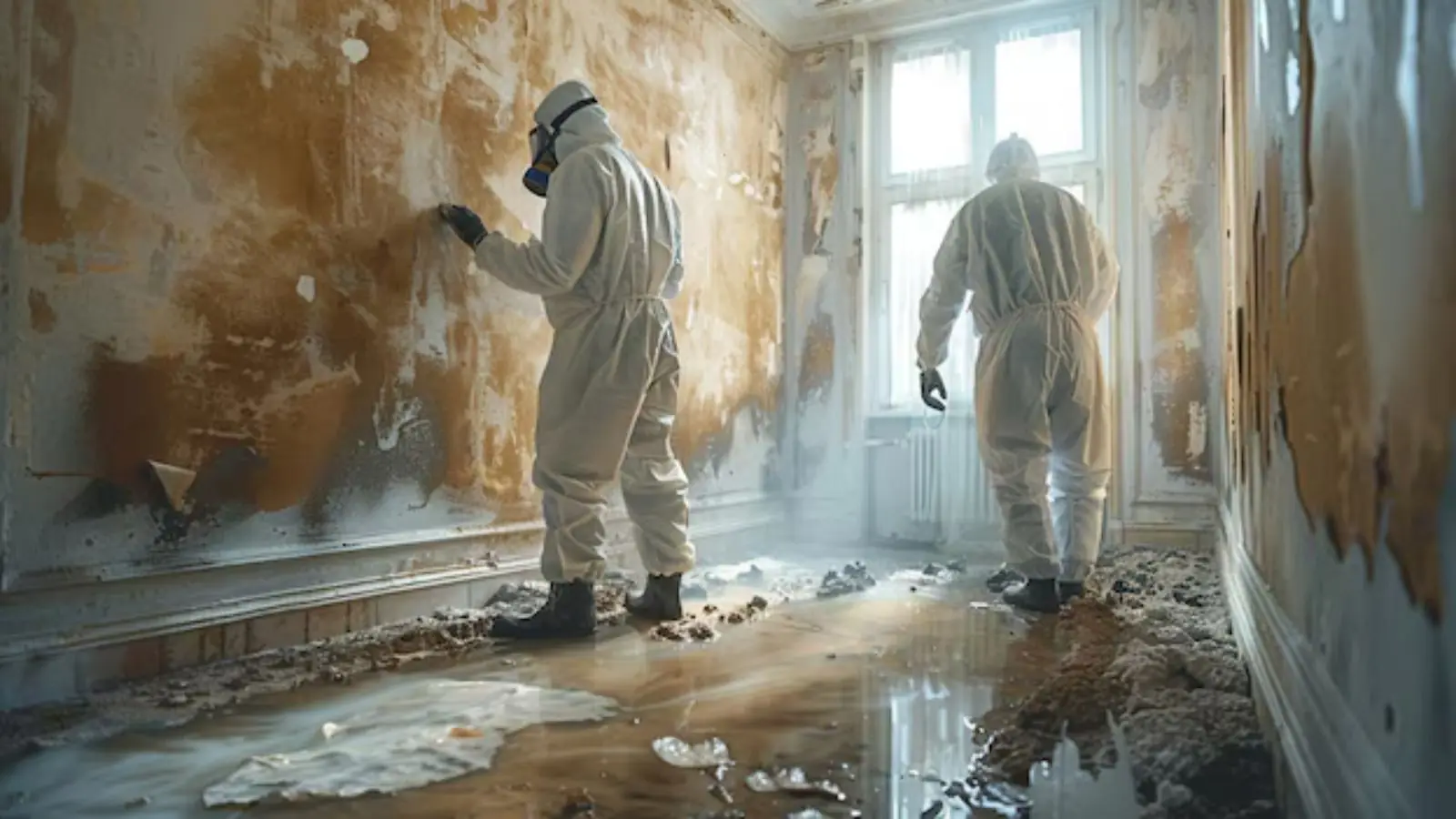
The 48-hour window is the number to remember
The U.S. Environmental Protection Agency (EPA) gives homeowners one number to work with: 24 to 48 hours to get a wet area dry, after which mold usually will not grow. The same guide says mold needs moisture. That is the whole logic of this page. Every hour a wall cavity, carpet pad or ceiling stays wet is an hour spent inside the window, and once it closes the job changes from drying to deciding what has to be removed.
Nobody can say that mold appears on a precise hour in your house. Material, temperature and how much water soaked in all change the answer. What you can control is how soon the source is stopped, the water is pulled out and air movers and dehumidifiers get running.
A timeline by hours and days
| Time since the water | What is going on | What to do now |
|---|---|---|
| 0 to 24 hours | Water is wicking into drywall, baseboards, carpet pad and insulation. Surfaces may look dry while the inside is wet. | Stop the source. Shut the valve or tarp the roof opening. Lift furniture, pull standing water, open doors for airflow if outdoor air is drier. |
| 24 to 48 hours | This is the EPA drying window. Hidden moisture is the risk. | Run fans and a dehumidifier. Pull wet carpet pad and wet insulation. Get moisture meter readings on walls and floors. |
| Day 3 to day 5 | Material that is still wet is past the window. Musty odor may begin. | Do not close up walls. Call a restoration crew to map the moisture with a meter and thermal camera and decide what to cut out. |
| Day 6 to day 14 | Porous materials that stayed wet are the likeliest places for growth. EPA says porous items such as carpet and ceiling tiles may need to be thrown away if moldy. | Stop DIY drying. Ask about containment, HEPA air filtration and removal under ANSI/IICRC S520. |
| After two weeks | Staining, fuzzy patches or a smell that returns after cleaning point to a moisture source that is still active. | Find and fix the source first. Cleaning without fixing the water problem is likely to fail, per EPA. |
Read the table as a plan, not a prediction. The middle rows are the ones people miss. At day four the carpet looks fine and the fan has been running, so it feels finished. A moisture meter pressed into the baseboard may say otherwise.
Why winter in West Hills raises the odds
The 1991 to 2020 NOAA normals for Van Nuys Airport, a San Fernando Valley station, total 13.42 inches of rain a year. December (1.95), January (2.75), February (3.79) and March (2.50) add up to 10.99 inches, about 82 percent of the annual total. July's normal is 0.00 inches. A roof or window frame that sits dry for months must then hold off most of the year's water in four.
The city's wet-weather plan covers October 15 to April 15, and its sanitation department expects the heaviest rain between December and February. That is when a small ceiling stain, a wet sliding-door track or a damp attic can slip past you. Check the ceilings and window sills after every real storm, not just the big ones.
Where winter water hides in a house
- Attic insulation under a lifted roof tile or flashing, which holds water and releases it slowly to the ceiling below.
- The bottom plate of an exterior wall, where stucco cracks let rain track down.
- Carpet pad beside a sliding door, where wet shoes and drips collect.
- Closet walls shared with an outside wall, where nobody looks for weeks.
Keep the air as dry as the materials
EPA says to keep indoor relative humidity below 60 percent, ideally between 30 and 50 percent, and notes that inexpensive humidity meters cost roughly $10 to $50. CDC gives a similar ceiling, no higher than 50 percent, using air conditioning or a dehumidifier if needed. A cheap meter in the hallway tells you whether your drying is working in the air. It does not tell you what the wall is doing, which takes a pin or pinless moisture meter.
Wet but not yet moldy is the best time to call
Drying is a smaller job than remediation. If a ceiling or wall has been wet for more than 48 hours, get a crew to measure it before you paint, caulk or close anything.
What homeowners can do, and where to stop
You can stop the source, remove standing water with a wet vacuum, lift small furniture, run fans and a dehumidifier and photograph everything. You should stop before cutting out wet drywall in a room you cannot isolate, or scrubbing patches over a wall that is still damp. A crew uses containment barriers and HEPA air scrubbers so removal does not push dust and spores through the rest of the house.
When the wet area is large or has been wet for days, mold remediation follows the ANSI/IICRC S520 standard, which a homeowner can ask any company to explain. If the water is still recent, water mitigation comes first, because dry materials do not need remediation. Questions about how a house affects anyone's health belong with a physician, not a restoration crew.
Wet for more than a day?
Dispatch is open all night and on weekends. Ask us to measure the moisture first, then decide what stays and what goes.
Crews dispatched from West Hills reach neighbors on both sides of the neighborhood, from Chatsworth to the north to Woodland Hills to the south, and the same timeline applies in each.
What the numbers say about our wet season
At the Van Nuys Airport station (USW00023130), February is the wettest month at 3.79 inches, with January at 2.75 and March at 2.50 trailing it. For a West Hills homeowner, that points to checking ceilings and windows in January through March, and again right after any storm in December.
The city's storm season runs October 15 to April 15. Treat that span as your inspection season: roof, flashing, gutters and sliding-door tracks before it, and ceilings and corners during it.
Source: NOAA National Centers for Environmental Information, 1991 to 2020 monthly normals, Van Nuys Airport, and Los Angeles Sanitation and Environment, wet weather preparedness
Mold timeline questions from West Hills homeowners
When should I start checking for roof and window leaks in West Hills?
Before the rain, not during it. The city's storm season begins October 15 and ends April 15, and the biggest storms tend to land between December and February. Look at flashing, roof tiles and window seals in early October, then check ceilings and the bottoms of exterior walls after each storm. Early checks catch a small drip before the wet season delivers most of the year's rain.
How long does it take for mold to start growing after water damage?
EPA's advice is to get wet areas dry inside 24 to 48 hours, since mold usually will not grow if the drying happens in that window. After that, it depends on the material and how wet it stayed. Porous items such as carpet pad and ceiling tiles are the likeliest trouble spots. A crew with a moisture meter can tell you what is still wet.
Can I just use a fan and a dehumidifier myself?
For a small, recent spill on a hard floor, often yes. For wet drywall, insulation, carpet pad or a ceiling, the problem is moisture you cannot see. A pin or pinless moisture meter and a thermal camera show it. If readings stay high past 48 hours, bring in a crew.
Should I wait for the insurance adjuster before drying?
No. Dry first, says CDI's claims guide, when a loss is sudden, and act promptly to protect the property. Photograph first, keep receipts and call your insurer. Hold damaged items for the adjuster. If slow-leak damage may already have mold, CDI says to call the adjuster before cleaning it yourself.
Does a musty smell mean there is mold?
A musty smell means something is damp and worth tracing. It does not tell you what is growing or how much. Find the wet spot with a moisture meter, fix the source and dry it. If the smell returns after drying, ask a restoration company how they apply S520, or call (818) 337-2642 to describe it.