
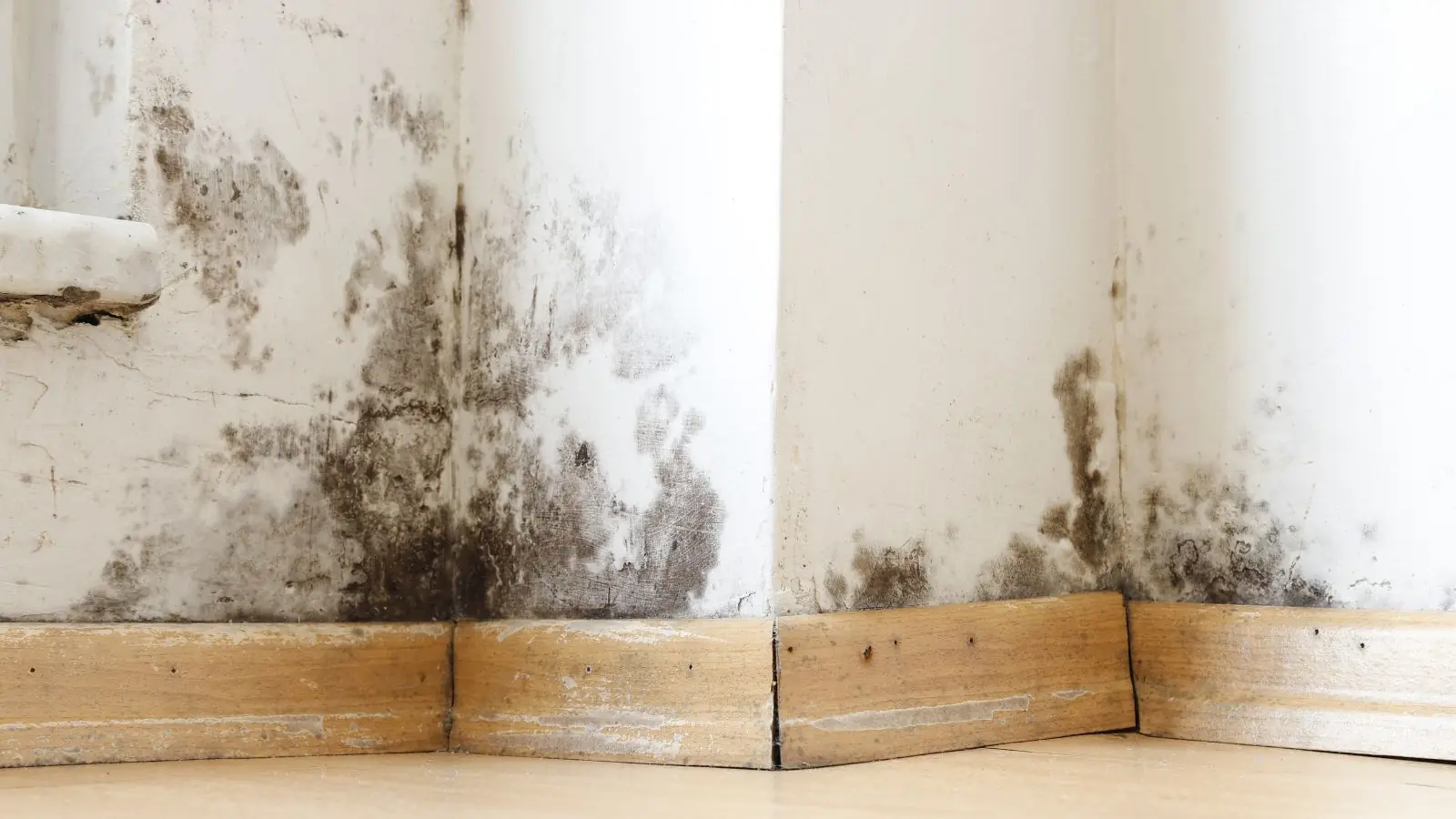
Why an air handler closet gets wet
A central air conditioner cools air by passing it over a cold coil, and that coil sweats, much like a glass of ice water. The water drips into a drain pan under the coil, then leaves the house through a condensate line, a small pipe that runs to a drain, a floor sink or the outdoors. A typical home can send several gallons through that pipe on a hot day, so any blockage matters.
When the line clogs with slime or debris, the pan fills and spills. When the pan rusts through or cracks, it leaks under the unit. Either way the water runs into the closet floor, the wall behind it and sometimes the ceiling or carpet below. A closet is closed, still and often warm, so damp stays put. That is why a slow drip becomes a musty room.
A wet closet in July is not a rain leak
The 30-year NOAA average at Van Nuys Airport, a Valley station, is 0.00 inches of rain for July and 0.01 for August. If your AC closet is wet in those months, the water is almost certainly coming from the system itself, not the roof. It also means the leak may have started in spring and run quietly all summer. By the time you smell it, a lot of material has been wet for a while.
What to check, in order
- Set the thermostat to off, then switch off the air handler breaker. A running unit keeps making water.
- Open the closet and look at the pan under the coil. Standing water means the line is blocked or the pan is leaking.
- Look for rust streaks, a crusty edge or a crack in the pan, and for a wet patch on the floor beside it.
- Check the pipe's outdoor end, if you can find it. With the system running, a healthy line usually drips at the outlet. No drip, with a full pan, points to a clog.
- Check whether a safety switch or float switch has tripped. Some systems shut off when the pan fills.
- Photograph every step, including the stains on walls, the floor and any stored items.
What you see and what it usually means
| What you see | Likely cause | Next step |
|---|---|---|
| Full pan, no drip at the outdoor end | Clogged condensate line | Switch the system off. Call an HVAC technician to clear the line. |
| Rust or a crack in the pan | Failed drain pan | Technician replaces the pan. Ask about a float switch. |
| Wet floor, dry pan | Leaking joint or a sweating duct | Technician traces it. Get moisture readings around the area. |
| Dark spots on drywall or closet shelf | Moisture on the surface, possibly mold | Fix the source first. Photograph. Ask a restoration crew to measure it. |
| Damp carpet in the hall outside | Water traveled under the door | Lift the edge, run a fan and call for extraction and drying. |
Fix the source first
The CDC warns that mold cleaned without fixing its moisture source will likely return, and EPA agrees. So the order is: stop the AC water, dry the closet, then deal with what is damaged. An HVAC technician fixes the line, pan or float switch, and a restoration crew dries the structure.
What a homeowner can safely do
- Switch the system off and keep it off until the line is cleared.
- Remove stored items and sort them dry from wet, keeping photos.
- Wet-vacuum standing water and run a fan or dehumidifier in the hall.
- Wear gloves and a respirator rated for dust if you wipe small surface spots on hard, nonporous shelves.
- Keep the closet door open so air moves.
EPA notes that porous materials such as carpet and ceiling tiles may need to be thrown away if they become moldy. Drywall in a closet that has been wet a while falls in that group. Cutting it out is not a casual job, because disturbing it can spread dust and spores to the rest of the house.
When to call a crew
Call when the wet area is bigger than a few inches, the wall is damp, carpet is involved or dark patches return after wiping. A crew maps the wet area with moisture meters and a thermal imaging camera. Where growth is found, mold remediation under ANSI/IICRC S520 includes containment barriers and HEPA air scrubbers while materials are removed. Water in the hall carpet is handled by water damage cleanup with air movers and a dehumidifier.
Dark spots or damp walls by the air handler?
Describe what you see and we will say whether it sounds like a drying job or a remediation job. Scope and cost come before any work begins.
Crews dispatched from West Hills cover Calabasas and Woodland Hills too, and the same AC closet pattern applies in each. Health questions about living with mold belong with a physician. A restoration crew deals with moisture, containment and removal.
What California's agencies say about mold and rentals
The California Department of Public Health (CDPH) treats housing with visible mold at a hazardous level as substandard, and an owner cited that way has to make the repair. Its tenant booklet points renters to the owner or manager first and puts the fix on the owner. If you rent, tell the landlord by text or email so you have a record.
Per CDI's claims guide, mold resulting from a covered cause of loss may fall under a homeowners policy. The guide also cautions that a slow leak can already have mold in it, so the adjuster should hear from you before you start scrubbing. An AC line that clogs slowly sits closer to a gradual leak than a sudden burst, so ask your insurer how your policy treats it.
Source: California Department of Public Health, Mold page and renters mold booklet, and California Department of Insurance, Residential Property Claims Guide
AC closet mold questions from West Hills homeowners
My AC closet is wet in July and it has not rained. Where is the water coming from?
Almost certainly the AC itself. The 30-year NOAA average at Van Nuys Airport is 0.00 inches of rain in July and 0.01 in August, so the roof is an unlikely source. Look at the drain pan and the condensate line, which carry the water the coil collects. A clogged line is the usual cause. Turn the system off and have a technician clear it.
Is mold in my AC closet covered by insurance?
It depends. Per the CDI guide, a homeowners policy may respond to mold that results from a covered cause, but a slow drip over months looks more like a leak, which is often excluded. Photograph the closet, keep your receipts and call your insurer before you clean. Hold damaged items for the adjuster.
Can I clean the dark spots myself?
Small surface spots on a hard shelf can be wiped by a homeowner once the water source is fixed. CDC says you need not identify the type of mold. Porous materials such as drywall, carpet and ceiling tile may need to be removed instead. If the area is damp, spreading or keeps returning, have a crew measure it.
I rent. Who fixes the leak in the closet?
Tell the owner or manager right away. CDPH's booklet says a rental must be livable and healthy, and the owner has to correct dampness or visible mold that becomes a hazard. Send a text or email so there is a record, photograph the closet and keep your belongings dry. Your own policy covers your things.
Should I keep running the AC until a technician comes?
No. A running unit keeps producing condensate, and a full pan overflows. Switch the system off at the thermostat and the breaker. Open windows or use fans, and call a technician. If the hall carpet is wet, call (818) 337-2642 so extraction and drying start the same day when available.