
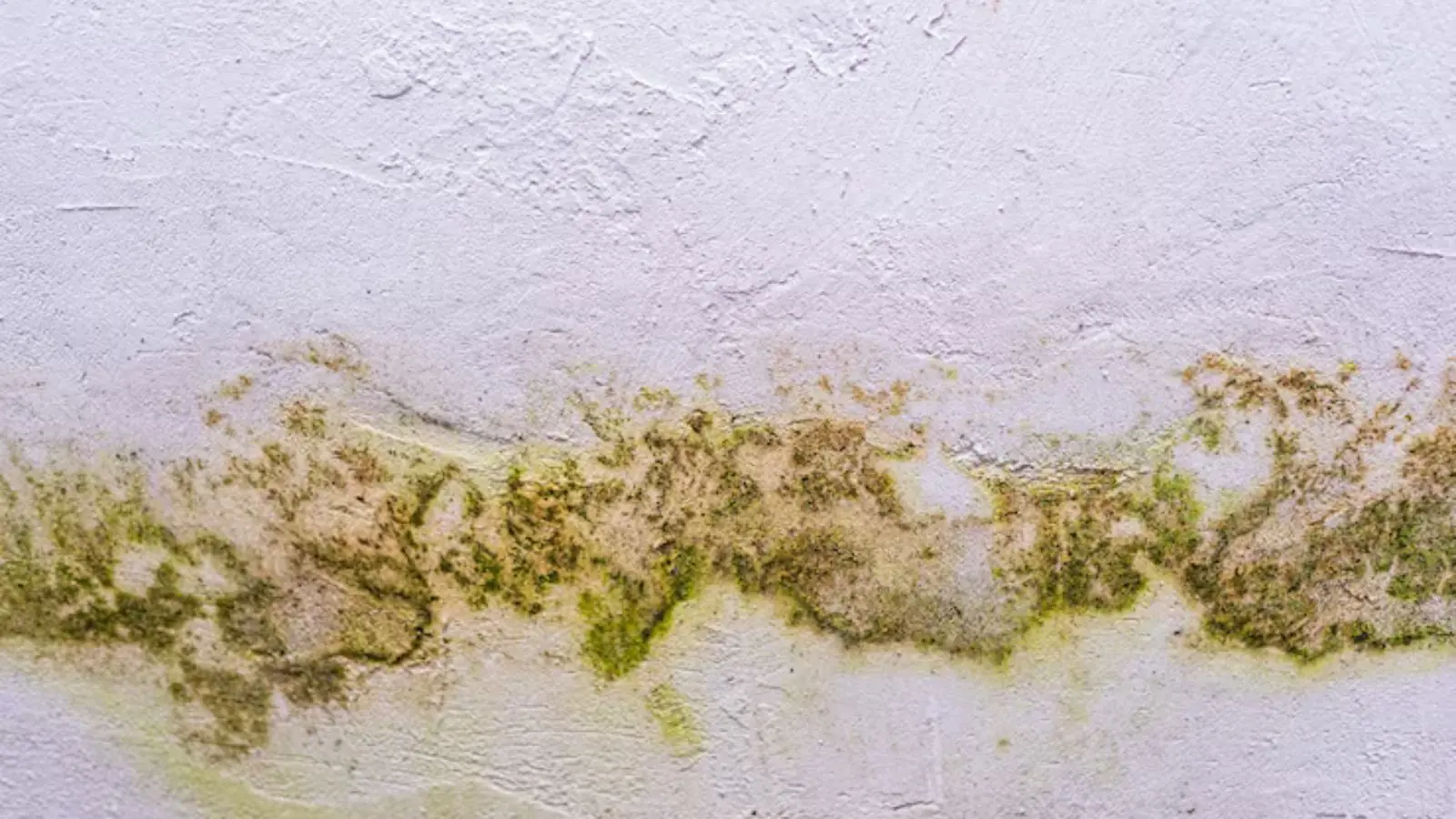
Someone moves the dresser and finds gray freckles on the wall. Or the corner of the shower ceiling has turned dark again, three weeks after you scrubbed it. The question that comes with these photos is nearly always the same: is this mildew I can clean, or mold I need someone to deal with?
The names matter less than three things: what the surface is made of, how big the patch is, and whether the moisture behind it is still there. A table below lets you hold your own wall up against common cases.
What people mean by mildew, and what they mean by mold
In everyday speech, mildew is a flat, powdery or downy growth that sits on a surface such as shower tile, a window sill or a painted bathroom wall. Mold is the word people use for growth that looks fuzzy, slimy or dark and that has settled into something porous like drywall, wood, carpet or insulation. Scientifically, mildew is a kind of mold, so the line is about depth and material, not species.
The CDC says you do not need to identify which mold you have before cleaning it, and that cleaning without fixing the moisture source means it is likely to return. That fits what restoration crews see in practice. Naming the color rarely helps. Finding the water does.
The wipe test: a two-minute check before you decide
- Wear rubber gloves and eye protection, open a window and keep the fan running.
- Wet a cloth with warm water and dish soap and wipe one small spot on a hard surface such as tile, glass or sealed paint.
- If the mark lifts and the cloth shows it, the growth was riding on the surface.
- Dry the spot with a clean towel and check it again in a week.
- If the stain does not lift, the surface feels soft, or the same spot is dark again in days, stop scrubbing and treat it as a moisture problem.
Never mix cleaning products
The CDC says that if you use bleach, use no more than 1 cup per gallon of water, and never mix bleach with ammonia. Many household cleaners contain one or the other, so pick a single product and rinse before switching to another.
What you see, what likely caused it, and who handles it
| What you see | Likely cause | DIY or call |
|---|---|---|
| Dark specks on bathroom grout or caulk | Steam and splashing on a hard surface | DIY with soap and water, then run the fan longer |
| Dark patch where the shower wall meets the ceiling | Weak ventilation or a small leak above | Try the wipe test first. If it returns within days, call |
| Spots in a closet or on a wall behind furniture | Air trapped against a cool outside wall, or a leak behind it | Call, especially if the wall is cold or damp to the touch |
| Stain or bubbling on a ceiling below a bathroom | Toilet, tub or supply-line leak overhead | Call. Water is inside the ceiling and the leak must be found |
| Musty smell with nothing visible | Moisture inside a wall, floor or air-handler closet | Call for an assessment with a moisture meter |
| Growth on the underside of carpet or pad | Water that soaked in and was never dried | Call. Porous materials like pad are usually removed |
Notice what the right column keeps saying: when the surface is porous, the fix is rarely a better scrub. Mold in drywall, wood or insulation has spread below what you can see. That is when mold remediation uses containment barriers, HEPA air scrubbers and removal of the affected materials under the ANSI/IICRC S520 standard.
Four places growth starts in West Hills homes
Bathroom ceilings
A fan that sounds busy but barely moves air lets steam settle on the ceiling. A dark corner is often the first sign, and a leak overhead is the second.
Closet walls on outside corners
Furniture pushed against a cool exterior wall stops air from moving. The wall surface stays damp enough for growth, which people notice when they shift the dresser.
Cabinets under sinks
A weeping slip nut or supply connection keeps the cabinet floor damp for weeks. Particleboard soaks it up and holds it.
Air handler closets
A clogged condensate line backs up and wets the floor or drywall around the unit. A musty smell near the vents is the usual clue.
Each of these starts with water that someone did not know about, not with a dirty house. For help locating the source, our water mitigation crews read moisture meters and thermal images to locate wet material behind finished surfaces. Fixing the source first matters, because remediation without a dry structure is just a delay.
When a pro should look first
- The growth is on drywall, ceiling texture, insulation, wood framing or carpet rather than hard tile or glass.
- You can smell mustiness but see nothing, or the smell is stronger after a rain or a shower.
- A recent leak, flood or sewage backup wet the area and was not dried within 24 to 48 hours.
- The patch returns after cleaning, or you find it in more than one room.
- You are selling, buying or renting and need a documented answer, not a guess.
If any of those fit, the next step is an assessment, not a bigger bottle of cleaner. A technician looks at the surface, takes moisture readings and explains what is affected. Expect the scope and cost spelled out before work begins. People in Winnetka and Calabasas call us with the same closet and bathroom patterns, so a description over the phone at (818) 337-2642 is a fine place to start.
Valley rainfall and what California says about dampness in rentals
NOAA's 1991 to 2020 climate normals for Van Nuys Airport, the closest verified Valley station, add up to 13.42 inches a year, and February the wettest month at 3.79 inches. January brings 2.75, March 2.50 and July none at all. So roof, window and wall leaks tend to show up in the winter wet season, and summer growth more often traces to showers, plumbing and air conditioner condensate.
California's public health department publishes a mold booklet for renters. It states that a landlord must supply a home fit to live in, and that the landlord must fix dampness or visible mold when it is a health hazard, with tenants advised to tell the owner or manager. If you rent, report dampness early and keep dated photos. The same agency says that from January 1, 2022 prospective tenants must be handed that booklet.
Source: NOAA NCEI 1991 to 2020 monthly normals for Van Nuys Airport, California Department of Public Health mold booklet and mold page
Questions before you decide? Call (818) 337-2642 and describe what you see.
Questions about mold and mildew
Does West Hills' dry climate mean mold is not a concern here?
No. Mold needs moisture, not rain. The Van Nuys normals show a dry summer and a wet January through March, but indoor water runs all year from showers, leaking supply lines, drains and condensate lines. Hidden moisture in a wall can support growth in any month, so look for the water first.
Is mildew the same thing as mold?
In practice mildew describes light, flat growth on a surface, while mold describes deeper growth in porous material. Scientifically, mildew is a type of mold. The CDC says you do not have to identify the type before cleaning, so focus on the surface, the size of the patch and whether the moisture source is fixed.
Can I clean mold with bleach?
On hard surfaces it is one option. The CDC says to use no more than 1 cup of bleach per gallon of water and never to mix bleach with ammonia. Wear gloves and eye protection, ventilate and do not combine products. Bleach does not fix a leak, and porous materials like drywall or carpet may need removal instead.
How long after a leak does mold start?
The EPA advises drying water-damaged areas within 24 to 48 hours, and says mold needs moisture. Growth can begin if materials stay damp past that window. A slow leak that has run for weeks may already have growth inside the wall.
Do I need a professional for a few spots on a closet wall?
A few spots on a closet wall usually mean moisture behind the wall, so an assessment is worth it. A technician checks the wall with a moisture meter to find out whether the area is wet and why. Surface cleaning alone often fails when the wall stays damp.
I rent in West Hills and see dampness. What should I do?
Tell your owner or manager and keep dated photos. The state health department's booklet puts the duty to fix dampness or visible mold on the owner when it is a health hazard. Read your lease and do not start tearing out walls yourself.